
West Africa, an emerging market
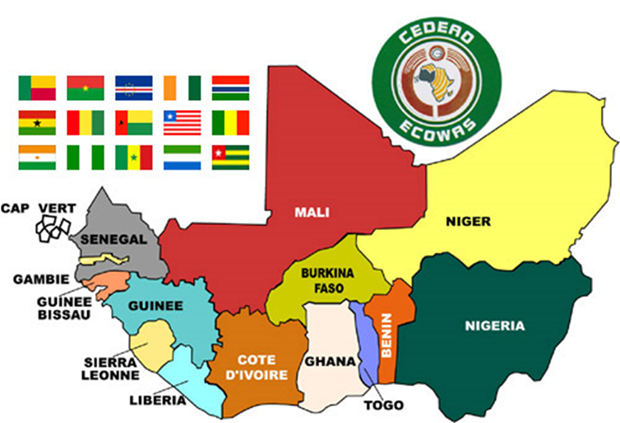
West Africa comprises 15 countries that make up ECOWAS (Economic Community of West African States), one of Africa’s leading regional organizations focused on promoting economic cooperation, trade, and development among its members.
Within this community, WAEMU (West African Economic and Monetary Union) comprises 8 states that share a common currency, the CFA franc, managed by the Central Bank of West African States (BCEAO). This monetary integration fosters stability and reduces risks for businesses and investors.
West Africa represents a large and dynamic market, with a young and rapidly growing population driving demand for goods, services, and innovative solutions. Its regional structure and progressive integration make it a strategic destination for internationally minded companies.
WAEMU
West African Economic and Monetary Union
The WAEMU is an economic and monetary union that currently comprises 8 West African countries that share the CFA franc (XOF) as their common currency, issued by the Central Bank of West African States (BCEAO), headquartered in Dakar, Senegal. This currency offers enhanced stability due to its historically pegged exchange rate to the euro, reducing risks for international investors and traders.
Objective: To create a harmonized economic space with the free movement of goods, services, capital, and people, promoting the economic integration of its members.
Area: 3.506.126 km²
Estimated population: ~135 million inhabitants.
Member countries:
ECOWAS
Economic Community of West African States
ECOWAS is a regional bloc founded on May 28, 1975, to promote economic cooperation and integration among West African countries. Its long-term strategic objective is to move towards even deeper economic union, including the possible introduction of a common currency for the entire region (eco), the adoption of which is planned for stages after 2027.
Objective: To foster economic integration, trade cooperation, and greater policy coordination that facilitates intraregional trade, investment, and sustainable development.
Area: ~5.114.162 km² —one of the largest regional economic areas in Africa.
Estimated population: ~425–450 millon de inhabitants.
ECOWAS Member States (includes the 8 WAEMU member states and 7 others):
Importance of the WAEMU and ECOWAS areas for businesses and investors
The existence of these regional structures—WAEMU and ECOWAS—creates a more stable environment with growing opportunities for international business.
This framework makes West Africa a strategic platform for the international expansion of European and African companies.
Monetary and economic integration facilitates:
- Macroeconomic and banking stability
- Access to an expanded and diversified market
- Reduction of internal trade barriers
- An environment conducive to foreign investment and regional trade relations
AfCFTA
AFRICAN CONTINENTAL FREE TRADE AREA
The AfCFTA is one of the world’s most ambitious economic integration projects and a strategic pillar for the development of trade in Africa.
With an approximate area of 30.3 million km² and an estimated population of over 1.3 billion by 2026, Africa is consolidating its position as one of the world’s largest emerging markets.
The AfCFTA was launched in 2015 and officially came into effect in january 2021, establishing a common framework for the progressive free movement of goods and services across the continent. Currently, 54 of the 55 African countries have signed the agreement, with Eritrea being the only non-participating state.
Main objective: To create a single African market that fosters intraregional trade, boosts business competitiveness, and generates sustainable employment.
Main benefits:
- Access to an integrated continental market
- Gradual reduction of tariff barriers
- Stimulation of investment and industrialization
- Strengthening of regional value chains
Trade liberalization: Member countries commit to:
- Gradually eliminating up to 90% of their tariff lines
- Implementing timelines of 5 to 10 years, depending on their level of development
- Maintaining a small percentage of sensitive products under special schedules

- Countries confirmed
- Signed in March 2018, not confirmed
- Signed in July 2018 or later, not confirmed
Impact for businesses: The AfCFTA opens new opportunities for local and international companies, facilitating market access, reducing operating costs, and fostering the development of regional projects.
Download (PDF): ACCORD PORTANT CRÉATION DE LA ZONE DE LIBRE ÉCHANGE CONTINENTALE AFRICAINE
Beyond the numbers, West Africa is a collection of countries with their own distinct characteristics, to the point of making each country unique, both economically, culturally, and politically. That’s why it’s important in business to have a counterpart who knows each country well in order to succeed in the project.
Would you like more specific information about any of these countries? Don’t hesitate to contact us.